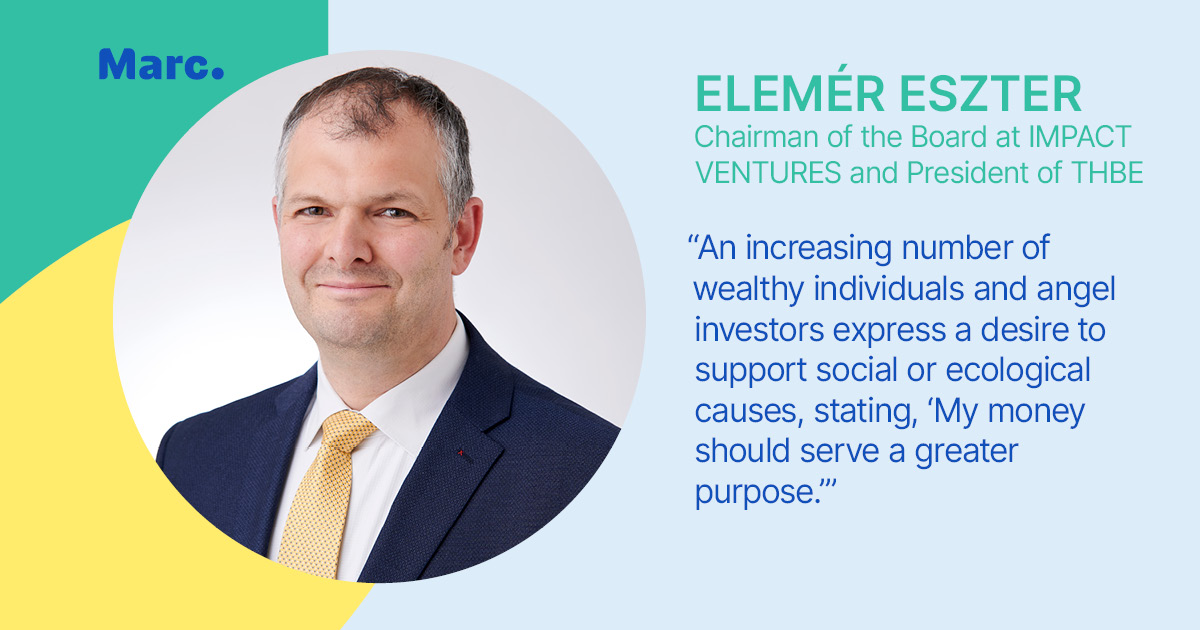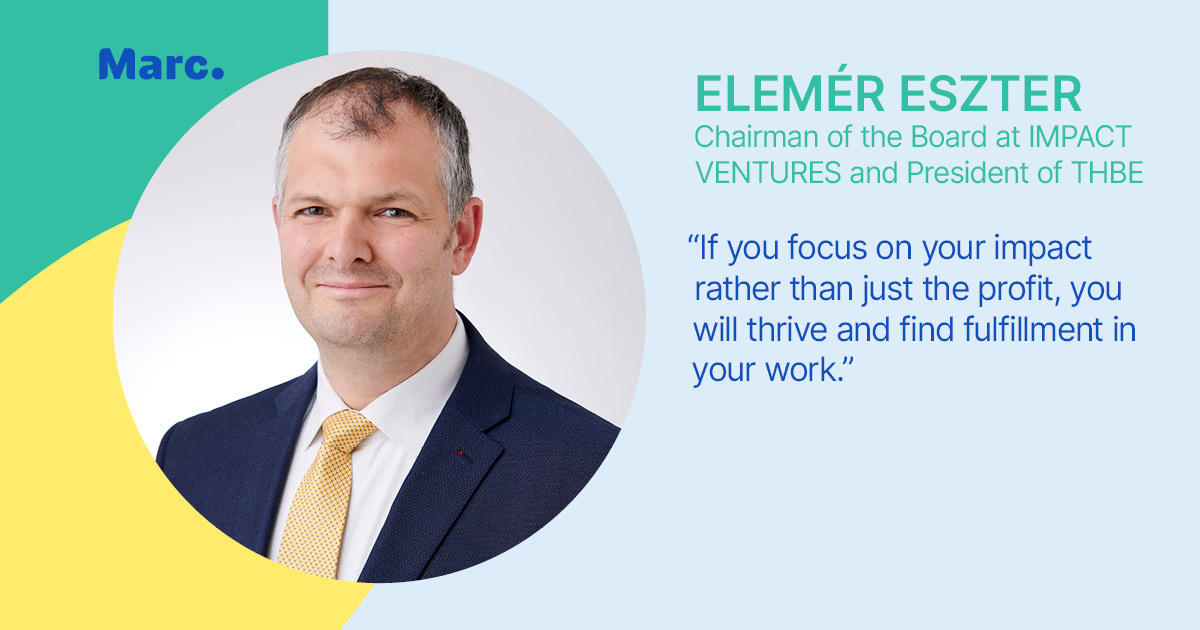
Elemér Eszter is an opinion leader in impact investing in Hungary, serving as the Chairman of the Board at IMPACT VENTURES, one of the first regional impact venture capital fund management companies focused on socially and ecologically impactful investments. He also presides over THBE, the Social Impact Investors Association in Hungary. We spoke with him about the challenges and opportunities within the impact investing landscape and the importance of nurturing impact enterprises.
What are the primary challenges facing the impact investing market, and how can it expand significantly?
The biggest challenges come from the venture capital nature of this market. We need more wealthy individuals and institutions to embrace impact investing. Pension funds are particularly crucial, but their current policies often prevent them from investing in venture capital due to perceived risks and negative reputations. It’s essential for all institutions—whether pension, insurance, equity, or bond funds—alongside affluent individuals, to recognise the importance of allocating at least 1–2% of their capital to impact investments. This shift towards long-term, responsible thinking is vital.
Impact investments are not only innovative and fast-growing but also improve quality of life, tackle social issues, protect the environment, and promote sustainability. For example, if we don’t reverse current ecological and social trends, the number of people saving for retirement will decrease, directly threatening the viability of pension funds.
When I visited the UK in 2017 to study their impact investment ecosystem, I connected with Social Enterprise UK, which has about 12,000 members. This shows the immense potential for growth in Central and Eastern Europe. If we can improve the financing aspect, growth on the investee side will naturally accelerate.
Do you believe the impact economy can rival or surpass the for-profit and NGO sectors, or will it remain niche?
That’s the million-dollar question. I truly believe in the potential of the impact economy. I feel that our work here is making a difference. Our goal is to build successful businesses from our 20 funded impact enterprises, which will then serve as role models for others. In the medium term, these enterprises will act as catalysts, demonstrating responsible venture capital funding in action.
I also think that as younger generations in affluent families take over, they bring with them a more idealistic desire to support noble causes and a more forward-thinking mindset. Capacity builders are becoming more effective, and programmes like the Marc Impact Programme are invaluable in fostering a system based on sound principles. While the path is challenging—IMPACT VENTURES must work twice as hard as traditional venture capital funds—it is rewarding. The sector will undoubtedly gain more followers.
You mentioned the Marc Impact Programme. How can it assist, and where is it most needed?
The Marc Impact Programme is crucial and can provide much-needed support. In the startup ecosystem, finance is just one part of the equation; we also need robust enterprises to invest in. Erste Bank has been a key player in enterprise development for many years. Its predecessor, Erste SEEDS, laid a solid foundation and brought about a meaningful shift in mindset. I expect the Marc Impact Programme to continue this progress, helping entrepreneurs realise that social or environmental impact is not just a mission or an ideal; it can be a profitable venture. Billions of euros are already being invested by venture capital funds into strong businesses that serve a social purpose.
However, the key challenge for the Marc programme—and for all enterprise accelerators—will be to avoid offering short-term support that leaves enterprises unprepared for long-term independence. The programme must provide ongoing guidance until these entrepreneurs are ready to scale on their own and secure independent funding.
What role do you see banks playing in the financing of impact enterprises?
In time, bank loans should begin to supplement venture capital as a source of finance for impact enterprises. As these businesses mature, the share of venture capital should decrease, while bank loans should increase. Ideally, impact enterprises will eventually reach a stage where venture capital is no longer necessary. Banks need to become effective partners in this process, offering loan products that can be integrated into the financing of impact enterprises at the right stage of their development.
At the moment, many banks seem to target impact or social enterprises simply to expand their business, without offering tailored solutions. Impact enterprises go through the same loan evaluation process as any other company, but banks need a different mindset. They must recognise that these enterprises create social or ecological value and have the potential for significant growth, eventually becoming major clients.
Do you believe Erste is among those banks that have yet to adopt this new attitude towards impact enterprises?
I can only share observations about Hungary here. Erste Social Banking is introducing this new perspective. Banks operate like large cargo ships; their steering mechanisms cannot change direction rapidly. Transformation must occur gradually. I believe the Erste team, headed by Orsi Szalay is well-positioned to facilitate this slow shift, and the Marc Impact Programme may help channel insights from participating enterprises back into the banking system to enable this transition.
What message would you offer to future participants of the Marc Impact Programme?
First and foremost, dig deep into your humanity. Understand your core values and build an enterprise that is grounded in them. This alignment will bring you joy in your work, even during difficult times. Secondly, be prepared for the tough reality of this business—it is not easy. Finally, find a balance between fearing profit and obsessing over it. If you focus on your impact rather than just the profit, you will thrive, and you will certainly earn enough to sustain and grow your enterprise, while staying fulfilled.
Is IMPACT VENTURES open to investing in future participants of the Marc Impact Programme?
Absolutely. Several enterprises in our portfolio have come from development programmes like the Marc Impact Programme, so I’m always interested in evaluating future participants as potential investment opportunities.